Cel mai bun moment pentru a face sex pentru a concepe: un ghid al ferestrei tale fertile


Știai că rata fertilității în SUA a fost la niveluri istorice scăzute în ultimii ani, cu datele din 2023 arătând doar 53,1 nașteri la 1.000 de femei? Deși această statistică poate părea descurajantă, realitatea pentru majoritatea oamenilor este mult mai optimistă, deoarece aproximativ 80% dintre cupluri concep în primele șase luni de încercări. Adesea, diferența dintre o așteptare lungă și un test pozitiv este pur și simplu să știi care este cel mai bun moment pentru a face sex pentru a concepe. Sincronizarea nu este doar o parte a procesului; este cel mai important factor pe care îl poți controla.
Este epuizant să simți că trebuie să „performanți” la cerere sau să te îngrijorezi că ciclul tău nu se potrivește cu tiparul clasic de 28 de zile. Meriți o strategie clară care să înlocuiască anxietatea cu încredere. Acest ghid promite să-ți arate exact cum să identifici fereastra ta fertilă și să folosești această cunoaștere în avantajul tău. Vom parcurge cele mai eficiente metode de a identifica ovulația, de la benzi de testare accesibile până la aplicații avansate aprobate de FDA. La finalul acestui articol, vei avea un plan practic pentru a reduce stresul legat de încercarea de a concepe și pentru a merge mai departe cu claritate pe drumul către a deveni părinte.
Concluzii cheie
- Află de ce durata biologică de viață a spermatozoizilor face ca cele cinci zile dinaintea ovulației să fie cea mai critică parte a ciclului tău.
- Identifică cel mai bun moment pentru a face sex pentru a concepe urmărind semne fizice precum mucusul cervical „de consistență albușului de ou” și schimbările temperaturii bazale a corpului.
- Descoperă de ce a avea contact sexual la fiecare una-două zile în timpul ferestrei tale este mai eficient decât să încerci să sincronizezi un singur moment „perfect”.
- Află cum anumite produse de zi cu zi, cum ar fi lubrifianții standard, pot afecta neintenționat motilitatea spermatozoizilor și șansele tale de succes.
- Înțelege liniile temporale medicale specifice pentru când să treci de la monitorizarea acasă la căutarea îndrumării profesionale în fertilitate.
Înțelegerea ferestrei fertile: Știința sincronizării
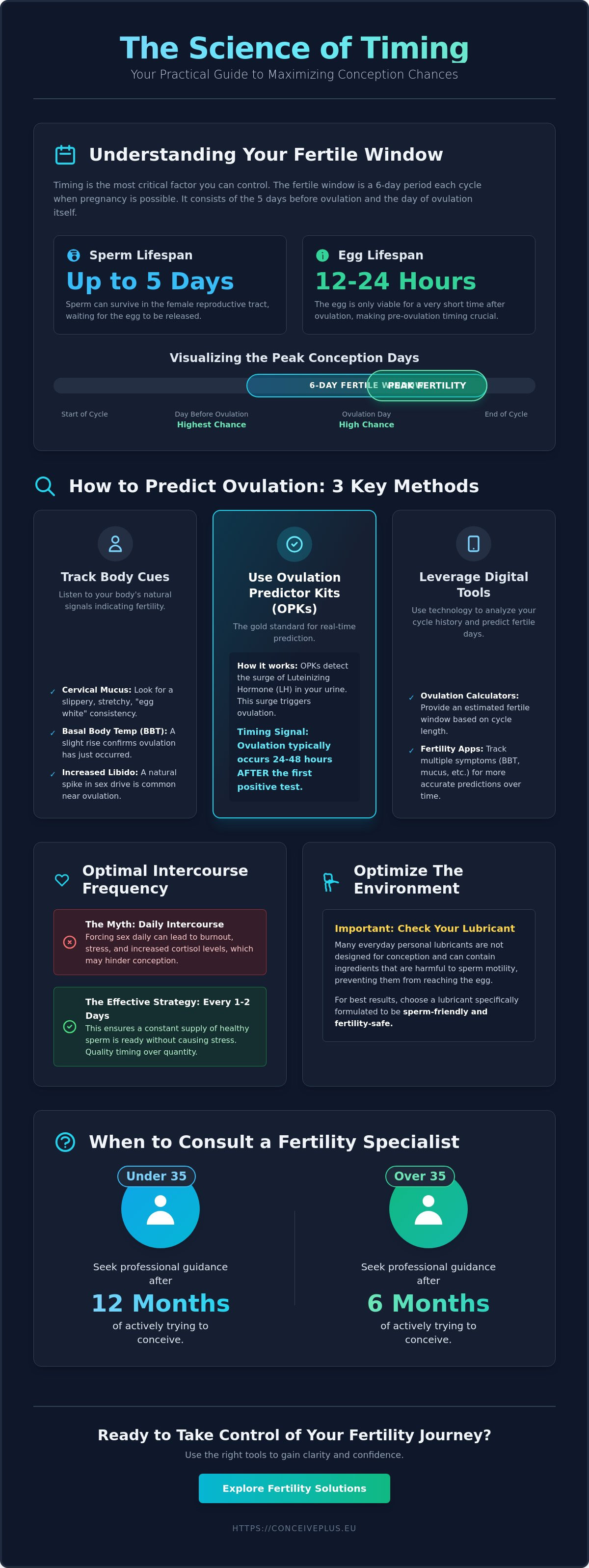
A rămâne însărcinată nu este un eveniment întâmplător; este o fereastră biologică care se deschide și se închide cu precizie. Această „fereastră fertilă” include cele cinci zile înainte de ovulație și ziua ovulației în sine. Să știi care este cel mai bun moment pentru a face sex pentru a concepe este fundamentul pentru înțelegerea ferestrei tale fertile și maximizarea potențialului tău reproductiv. Este vorba despre alinierea a două ceasuri biologice diferite pentru a se întâlni în momentul exact potrivit.
Deși fereastra se întinde pe șase zile, cele două zile dinaintea ovulației sunt zilele tale de vârf. Aceste 48 de ore oferă cea mai mare probabilitate de succes. Identificarea acestui interval specific este vitală deoarece asigură că spermatozoizii sănătoși sunt pregătiți și așteaptă când ovulul este eliberat. Dacă aștepți până ai ovulat deja pentru a începe încercările, s-ar putea să fie deja prea târziu pentru acel ciclu.
Pentru a înțelege mai bine acest concept, urmărește acest videoclip util:
Ovul vs. spermatozoid: o cursă contra cronometru
Odată ce un ovul este eliberat, acesta supraviețuiește doar aproximativ 12 până la 24 de ore. Este o celulă fragilă cu o durată de viață foarte scurtă. Dacă nu este fertilizat în acest interval restrâns, începe să se descompună și fereastra se închide până luna următoare. Spermatozoizii, însă, sunt mult mai rezistenți. În condițiile potrivite, pot trăi în tractul reproductiv feminin timp de trei până la cinci zile. De aceea, „așteptarea ovulului” este o strategie mult mai eficientă decât „alergarea după ovul”. Prin contactul sexual în zilele premergătoare ovulației, colul uterin poate proteja și depozita spermatozoizii în pliurile sale. Aceștia pot înota astfel spre trompele uterine și rămân viabili până când ovulul sosește. Este ca și cum ai avea o comisie de primire pregătită pentru oaspetele de onoare.
De ce contează mai mult sincronizarea decât frecvența
Mulți cupluri presupun că trebuie să facă sex în fiecare zi pentru a reuși. Acest lucru nu este adevărat. Deși contactul frecvent este benefic, forțarea lui zilnică poate duce la epuizare fizică sau stres emoțional. Această presiune poate face de fapt mai dificilă concepția prin creșterea nivelului de cortizol. Când încerci să găsești cel mai bun moment pentru a face sex pentru a concepe, nu te închide în mentalitatea că mai mult înseamnă întotdeauna mai bine. Cercetările sugerează că a face sex la fiecare una sau două zile în fereastra ta fertilă este la fel de eficient ca sesiunile zilnice. Acest program constant asigură un aport proaspăt de spermatozoizi fără să transforme procesul într-o corvoadă. Dacă nu ești sigură când începe fereastra ta, folosirea unui instrument precum un calculator de ovulație te poate ajuta să-ți planifici ciclul mai precis. Concentrarea pe sincronizarea calitativă, nu pe cantitate, te va ajuta să rămâi relaxată și conectată cu partenerul tău.
Cum să prezici ovulația: identificarea zilelor tale de vârf
Prezicerea momentului exact al eliberării ovulului nu trebuie să fie un joc de ghicit. Deși corpul tău oferă mai multe indicii biologice, cea mai sigură metodă de a găsi cel mai bun moment pentru a face sex pentru a concepe este combinarea urmăririi fizice cu instrumente moderne. Folosirea unui calculator digital de ovulație poate simplifica acest proces prin analizarea istoricului ciclului tău pentru a prezice cele mai fertile zile. Totuși, combinarea acestor predicții cu date în timp real de la kiturile de prezicere a ovulației (OPK) este standardul de aur. Aceste kituri detectează creșterea hormonului luteinizant (LH) care apare aproximativ cu 24 până la 48 de ore înainte de ovulație, oferindu-ți un semnal clar că fereastra ta de vârf a sosit.
Urmărirea mucusului cervical și a semnalelor corpului
Secrețiile corpului tău se schimbă semnificativ pe măsură ce te apropii de fereastra fertilă. La începutul ciclului, s-ar putea să te simți „uscată”, dar pe măsură ce nivelul de estrogen crește, mucusul cervical devine cremos și apoi capătă o consistență alunecoasă și elastică, asemănătoare cu albușul de ou crud. Acest mucus cervical de tip albuș de ou (EWCM) este mediul perfect pentru ca spermatozoizii să călătorească. Pe lângă schimbările mucusului, unele femei experimentează o durere ascuțită în zona pelviană, cunoscută sub numele de mittelschmerz, sau o creștere vizibilă a libidoului. Deși acestea sunt semnale excelente de „start”, temperatura bazală a corpului (BBT) este diferită. O ușoară creștere a temperaturii tale de repaus confirmă că ovulația a avut deja loc. Aceste date sunt utile pentru a urmări tiparele ciclului tău în timp. Înțelegerea acestor schimbări este o parte esențială a învățării cum să rămâi însărcinată eficient.
Calcularea ciclului tău (chiar dacă este neregulat)
Regula standard „ovulația are loc în ziua 14” se aplică doar dacă ai un ciclu perfect de 28 de zile. În realitate, ovulația apare aproximativ cu 14 zile înainte de începerea următoarei menstruații. Dacă ai un ciclu scurt de 21 de zile, poți ovula chiar în ziua 7. Dacă ciclul tău durează 35 de zile, ovulația are loc probabil în jurul zilei 21. Pentru cei cu cicluri neregulate, calculul devine mai complex. De aceea, este esențial să urmărești cel puțin trei luni de date. Acest lucru te ajută să identifici intervalul lungimii ciclurilor tale, astfel încât să nu ratezi cel mai bun moment pentru a face sex pentru a concepe. Dacă ciclul tău variază cu mai mult de câteva zile în fiecare lună, prioritizează testarea LH și urmărirea mucusului în loc să te bazezi doar pe calculul calendaristic. Pentru a-ți susține călătoria, ai putea lua în considerare utilizarea produselor prietenoase cu fertilitatea de la Conceive Plus Europe pentru a te asigura că corpul tău este cât mai pregătit posibil pentru o fertilizare reușită.
Frecvența și pozițiile sexuale cele mai bune pentru concepție
Odată ce ai identificat fereastra fertilă, atenția se mută de la „când” la „cum”. Mulți cupluri simt o presiune imensă să urmeze reguli specifice în timpul actului sexual, dar știința este adesea mai simplă decât sugerează miturile. În timp ce cauți cel mai bun moment pentru a face sex pentru a concepe, este reconfortant să știi că corpul tău este conceput să profite la maximum de fiecare oportunitate. Nu trebuie să faci acrobații pentru a rămâne însărcinată. Spermatozoizii sunt înotători remarcabili; ajung în mucusul cervical în câteva secunde după ejaculare și pot ajunge în trompele uterine în câteva minute. Acest lucru se întâmplă indiferent de poziția aleasă sau dacă rămâi întinsă după aceea.
Nu există dovezi medicale că poziția misionarului este superioară altora. Gravitația pur și simplu nu poate învinge impulsul biologic al spermatozoizilor sănătoși. Unii experți sugerează că orgasmul feminin ar putea ajuta la transportul spermei datorită contracțiilor uterine, uneori numită teoria „aspirației”, dar acest lucru nu este dovedit. Cel mai important factor este confortul și conexiunea voastră. Conform ghidului Clinicii Mayo pentru a rămâne însărcinată, cheia este consecvența în zilele cele mai fertile, nu căutarea unei poziții „magice”.
Zilnic vs. la două zile: ce spune știința
Dezbaterea privind frecvența lasă adesea cuplurile confuze. Este mai bine să faci sex zilnic sau acest lucru „epuizează” rezervele de spermă? Pentru bărbații cu un număr normal de spermatozoizi, contactul sexual zilnic nu scade semnificativ calitatea spermei și poate chiar duce la cele mai mari rate de sarcină. Cercetările indică faptul că cuplurile care fac sex zilnic în perioada fertilă au aproximativ 37% șanse de concepție pe ciclu, în timp ce cele care fac sex la două zile au aproximativ 33% șanse. Deși identificarea celui mai bun moment pentru a face sex pentru a concepe este obiectivul principal, frecvența poate varia în funcție de nivelul tău de energie. A face sex la două zile este perfect suficient pentru a asigura că întotdeauna există un lot proaspăt de spermatozoizi pregătit pentru ovul.
Gestionarea stresului și spontaneității
Trecerea de la sexul pentru plăcere la sexul pentru procreare poate fi derutantă. Când actul sexual devine o „sarcină” pe calendar, adesea duce la anxietate de performanță sau la un sentiment de detașare clinică. Este vital să-ți amintești că o zi ratată nu îți va strica șansele pentru luna respectivă. Dacă te simți epuizată sau stresată, sări peste o noapte. Menținerea conexiunii emoționale este la fel de importantă ca sincronizarea fizică. Concentrează-te pe intimitate și amintește-ți că scopul este să creați o viață împreună, nu doar să bifezi o căsuță într-o aplicație de fertilitate. Reducerea acestei presiuni „la cerere” ajută la menținerea unei relații sănătoase în timpul unui parcurs care poate fi plin de provocări.
Optimizarea mediului: ajutând spermatozoizii să ajungă la ovul
Sincronizarea perfectă a ciclului este doar jumătate din luptă. Chiar și atunci când identifici cel mai bun moment pentru a face sex pentru a concepe, mediul intern al tractului reproducător trebuie să fie prietenos cu spermatozoizii pentru ca aceștia să supraviețuiască călătoriei. Mulți cupluri nu realizează că chiar produsele pe care le folosesc pentru a face actul sexual mai confortabil pot, de fapt, să le reducă șansele de succes. Crearea unui mediu prietenos cu spermatozoizii implică echilibrarea chimiei vaginale și adoptarea unor ajustări inteligente ale stilului de viață care susțin procesele naturale ale corpului tău.
Hidratarea joacă un rol surprinzător de important în acest proces. Deoarece mucusul cervical este compus în proporție de aproximativ 90% din apă, menținerea unei hidratări bune este esențială pentru producerea fluidului alunecos și alcalin de care spermatozoizii au nevoie pentru a călători. Dacă ești deshidratată, mucusul tău poate rămâne prea gros sau acid, făcând dificilă penetrarea cervixului de către spermatozoizi. Dincolo de aportul de apă, ar trebui să iei în considerare și chimia oricăror produse externe pe care le folosești în fereastra ta fertilă. Pentru a te asigura că corpul tău primește suportul potrivit, poți explora gama de produse pentru susținerea fertilității Conceive Plus Europe, care este special concepută să funcționeze cu chimia naturală a corpului tău.
Rolul pH-ului vaginal și motilității spermatozoizilor
Vagina este în mod natural acidă, menținând de obicei un pH între 3,8 și 4,5 pentru a proteja împotriva infecțiilor. Totuși, spermatozoizii au nevoie de un mediu mai alcalin, ideal între 7,0 și 8,5, pentru a rămâne mobili. În zilele tale cele mai fertile, corpul tău crește natural nivelul pH-ului, dar lubrifianții standard pot perturba acest echilibru delicat. Majoritatea lubrifianților comerciali au un pH foarte scăzut și concentrații mari de sare care pot imobiliza sau chiar ucide spermatozoizii în câteva minute. Folosirea produselor echilibrate ca pH și prietenoase cu spermatozoizii ajută la menținerea alcalinității necesare. Aceste formule specializate imită consistența mucusului fertil, permițând spermatozoizilor să înoate liber spre trompele uterine fără a fi blocați de o barieră chimică.
Factori de stil de viață care influențează fereastra ta fertilă
Obiceiurile mici zilnice pot schimba semnificativ rata de succes atunci când ați găsit cel mai bun moment pentru a face sex pentru a concepe. Pentru bărbați, căldura excesivă este un factor major; utilizarea frecventă a băilor fierbinți sau a saunelor poate reduce temporar numărul și motilitatea spermatozoizilor cu câteva grade. Pentru ambii parteneri, fumatul și consumul ridicat de cofeină pot afecta calitatea ovulelor și a spermatozoizilor. Reducerea acestor factori de stres în lunile în care încercați să concepeți creează o bază mult mai stabilă pentru sarcină. Dacă doriți o abordare mai holistică a sănătății în această perioadă, luați în considerare utilizarea pachetelor de fertilitate care oferă vitamine și minerale esențiale pentru ambii parteneri. Suportul cuprinzător asigură că, în timp ce vă concentrați pe calendar, corpul vostru este pregătit fizic pentru cerințele concepției.
Când să discutați cu un medic despre fertilitate
Deși majoritatea cuplurilor concep în decurs de șase luni de efort constant, drumul nu este întotdeauna simplu. Chiar și atunci când sunteți siguri că ați găsit cel mai bun moment pentru a face sex pentru a concepe, barierele biologice pot uneori împiedica o sarcină reușită. Înțelegerea momentului în care trebuie să treceți de la monitorizarea acasă la sfatul medical profesionist este un pas vital în protejarea sănătății reproductive. Datele din 2025 indică faptul că aproximativ 13,4% dintre femeile cu vârste între 15 și 49 de ani se confruntă cu fecunditate afectată, ceea ce înseamnă că au dificultăți în a rămâne însărcinate sau a duce o sarcină până la termen. Nu trebuie să parcurgeți aceste provocări singuri.
Ghidul medical standard din iunie 2026 sugerează că, dacă aveți sub 35 de ani, ar trebui să solicitați o evaluare medicală după 12 luni de contact sexual regulat, neprotejat. Dacă aveți 35 de ani sau mai mult, acest interval scade la 6 luni. Această schimbare există deoarece timpul devine un factor mai sensibil pe măsură ce îmbătrânim. De asemenea, ar trebui să luați în considerare o programare mai devreme dacă observați semnale de alarmă specifice, cum ar fi:
- Menstruații neregulate care fac imposibilă prezicerea ovulației.
- Istoric de boală inflamatorie pelvină sau infecții cu transmitere sexuală.
- Afecțiuni cunoscute precum SOP sau endometrioză.
- Intervenții chirurgicale anterioare abdominale sau pelvine pentru oricare dintre parteneri.
Vârsta și cronologia fertilității
Vârsta afectează fertilitatea mai mult decât aproape orice alt factor. Pe măsură ce femeile trec prin anii 30 și ajung în anii 40, atât cantitatea, cât și calitatea ovulelor scad. De aceea, sincronizarea celui mai bun moment pentru a face sex pentru a concepe devine și mai importantă pe măsură ce fereastra fertilă se îngustează. Nu este vorba doar despre femeie; fertilitatea masculină scade și ea odată cu vârsta, afectând motilitatea spermatozoizilor și integritatea ADN-ului. Verificările proactive ale sănătății pentru ambii parteneri pot identifica problemele din timp, economisindu-vă luni de frustrare și incertitudine.
Ce să pregătești pentru programarea ta
Medicul tău va fi mult mai eficient dacă îi oferi date concrete. Adu informații despre urmărirea ciclului pe o perioadă de trei până la șase luni, inclusiv rezultatele testelor LH sau graficele BBT. Acest lucru ajută specialistul să determine dacă ovulezi cu adevărat. Așteaptă-te ca prima vizită să includă analize de sânge pentru verificarea nivelurilor hormonale și o analiză a spermei pentru partenerul tău. În timp ce te pregătești pentru această etapă, amintește-ți că ofertele speciale sunt adesea disponibile pentru produsele de susținere a fertilității care te pot ajuta pe parcurs. Având datele pregătite, echipa ta medicală poate trece direct la soluții, fără să înceapă de la zero.
Preia controlul asupra drumului tău spre a deveni părinte
Acum ai la dispoziție instrumentele științifice pentru a-ți naviga ciclul cu precizie totală. Identificând zilele tale de vârf unice prin semnale fizice și înțelegând cum să protejezi motilitatea spermatozoizilor, ai depășit incertitudinea și anxietatea necunoscutului. Găsirea celui mai bun moment pentru a face sex în scopul concepției înseamnă, în cele din urmă, să lucrezi cu ritmurile naturale ale corpului tău, nu împotriva lor. Consistența și un mediu intern sănătos sunt cei mai buni aliați în acest proces, asigurând că fiecare oportunitate contează pentru atingerea obiectivului tău.
Milioane de cupluri din 2008 au avut încredere în Conceive Plus Europe pentru a-și susține visul de a întemeia o familie. Recomandate de medici în peste 70 de țări, produsele noastre sunt testate clinic pentru a fi prietenoase cu spermatozoizii și sunt concepute să imite fluidele fertile naturale ale corpului. Maximizează-ți șansele cu Conceive Plus Europe Fertility Support și oferă-ți un avantaj profesional în această călătorie. Fii răbdătoare și menține legătura cu partenerul tău pe tot parcursul acestei tranziții. Drumul tău este unic. Fiecare pas informat te aduce cu o zi mai aproape de un rezultat pozitiv.
Întrebări frecvente
Poți rămâne însărcinată în ziua ovulației?
Da, poți rămâne însărcinată în ziua ovulației, dar șansele tale sunt ușor mai mici decât în cele două zile anterioare. Un ovul supraviețuiește doar pentru o perioadă foarte scurtă după eliberare. Dacă aștepți până în ziua ovulației pentru a avea contact sexual, riști să ratezi complet fereastra dacă ovulul a fost eliberat devreme în acea zi. Prezența spermatozoizilor deja în trompele uterine este întotdeauna o opțiune mai sigură.
La câte zile după menstruație este cel mai bun moment să faci sex?
Cel mai bun moment pentru a face sex pentru a concepe începe de obicei la aproximativ 10 până la 12 zile după prima zi a ultimei tale menstruații, dacă ai un ciclu standard de 28 de zile. Acest interval variază semnificativ în funcție de lungimea ciclului tău personal. Dacă ciclul tău este mai scurt, poate fi nevoie să începi chiar de la ziua a șaptea. Monitorizarea mucusului cervical este un indicator mai sigur decât simpla numărare a zilelor din calendar.
Este mai bine să faci sex dimineața sau noaptea pentru a concepe?
Nu există dovezi științifice că momentul zilei influențează șansele de concepție. Deși unele studii mici au sugerat că numărul de spermatozoizi ar putea fi ușor mai mare dimineața, aceste diferențe nu sunt suficient de mari pentru a afecta ratele clinice de fertilitate. Ar trebui să te concentrezi pe perioada ta fertilă, nu pe oră. Alege momentul care ți se pare cel mai natural și mai puțin stresant pentru tine și partenerul tău.
Poți rămâne însărcinată dacă faci sex o singură dată în perioada fertilă?
Da, este suficient un singur contact sexual pentru a rămâne însărcinată dacă are loc în perioada ta fertilă. Deși a face sex la fiecare una-două zile îți maximizează șansele, o singură sesiune bine sincronizată poate fi de succes. Spermatozoizii sănătoși pot supraviețui câteva zile în tractul reproducător. Asta înseamnă că cel mai bun moment pentru a face sex pentru a concepe poate fi chiar cu câteva zile înainte ca ovulul să fie eliberat.
Ajută „statul cu picioarele ridicate” după sex să rămâi însărcinată?
Nu, statul cu picioarele ridicate nu crește șansele de a rămâne însărcinată. Spermatozoizii sunt programați chimic să înoate în sus, către colul uterin, aproape imediat după ejaculare. Gravitația nu împiedică spermatozoizii sănătoși să ajungă la destinație. Deși odihna câteva minute după contactul sexual poate fi confortabilă sau relaxantă, nu va schimba rezultatul biologic al întâlnirii sau nu va accelera procesul.
Care sunt primele semne că fertilizarea a avut loc?
Nu vei simți momentul exact al fertilizării, deoarece primele semne fizice apar de obicei în timpul implantării, la aproximativ 6 până la 12 zile mai târziu. Unele femei observă o sângerare ușoară, cunoscută sub numele de sângerare de implantare, sau crampe uterine ușoare în această perioadă. Totuși, cel mai sigur indicator timpuriu rămâne o întârziere a menstruației. Cele mai comune simptome, cum ar fi greața sau sensibilitatea sânilor, nu apar de obicei decât la câteva săptămâni după ce ai rămas însărcinată.